Friday, January 4, 2008

In surprise move, China lets Celil meet sister

LIFE SENTENCE

In surprise move, China lets Celil meet sister

Imprisoned Canadian complained of lack of medical attention, Uyghur-Canadian group leader says

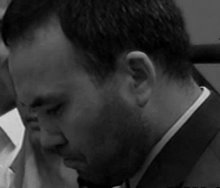
In a rare event, Canadian citizen Huseyin Celil was allowed to meet one of his family members last week, as he continues to serve a life sentence in China.

One of Mr. Celil's sisters, Meryem, met with the imprisoned Canadian for about 20 minutes, according to Mehmet Tohti, head of the Uyghur Canadian Association. It was the first time he had talked to his sister in 13 years, Mr. Tohti said. Mr. Celil was arrested in Uzbekistan and handed over to China in 2006. He was travelling on a Canadian passport at the time.

Chinese authorities accused him of terrorism and charged him with engaging in violent separatist activities. In April, he was sentenced to life in prison. In violation of international agreements, Beijing has refused to grant Canadian officials access to him.

The Canadian's story garnered international headlines last year, but Mr. Celil has largely disappeared from the news media spotlight since he began serving his life sentence.

In his meeting with his sister, he complained of persistent kidney problems, for which he has received no medical attention, Mr. Tohti said.

Mr. Celil is currently serving his life sentence in Bajiahu prison in northwest China. The prison has long been used to hold those accused by Chinese officials of separatist activities, especially members of the Muslim Uyghur minority.

Mr. Celil also revealed to his sister that his lawyer in Beijing has about 30 pages of first-hand testimony that the prisoner was not allowed to present during his Chinese court hearing, Mr. Tohti said.

The testimony would represent the first time Mr. Celil has given his side of the story since his imprisonment in Uzbekistan and subsequent deportation to China.

In his meeting last week, he asked that the testimony be transferred from his Beijing lawyer, who has essentially exhausted all Mr. Celil's legal avenues in China, to Canadian embassy officials.

Mr. Celil also asked his sister to plead with Canadian officials to arrange a phone call between the prisoner and his wife in Burlington, Ont., Mr. Tohti said. Mr. Celil has not seen or spoken to his wife since he was arrested.

Thursday, November 8, 2007

Help Canadians detained abroad


Nov 06, 2007 04:30 AM

In a nation like Canada with so many communities from every corner of the world, it is not unusual for some of our citizens to find themselves caught in the global terror-fighting dragnet.

Some Canadians, such as myself, hail from the very places that today are theatres of operations in the war on terror: Iraq, Afghanistan, Somalia and Lebanon. Others, who were born here, may share a common name or culture with those perceived to be targets of the global-war-on-terror machinery.

Yet when a Canadian citizen is detained by any authority – be it one with a dubious human rights record such as Ethiopia or one with a superficially stellar one like the United States under the current administration – it is disheartening not to have any public debate on the treatment of our citizens. All we hear are allegations and innuendo from anonymous Canadian security intelligence officers.

There appears to be no coherent public policy on how to deal with those who detain or render to a third country our citizens under the pretext of the war on terror. Worse, there has been no visible concerted Canadian effort to demand timely consular access to Canadians detained abroad.

If there were such a policy and concerted Canadian effort, Maher Arar probably would not have been deported to Syria by the U.S. in 2002; Huseyin Celil would not have been rendered by Uzbekistan in 2006 and put on a sham terror trial in China while our government pontificated through the press; and Bashir Makhtal would not have been held in an Ethiopian prison since January with no Canadian consular access, let alone help from our "new" government.

Contrary to our laws and public pronouncements from the Department of Foreign Affairs, it appears there is a presumption of guilt until our detained citizens prove their innocence. How else can any sane person explain the continued detention of Makhtal, who is not even listed in the official records of the very prison where he has been held for the past 10 months?

If Addis Ababa thinks Makhtal is guilty of something, why is Canada not able to prevail on Ethiopia, a nation that receives our development aid, to go ahead and prosecute him rather that allowing the Ethiopian authorities to keep him in indefinite detention?

Blaming the plight of Arar on the former Liberal government while doing very little to help detained Canadians like Makhtal and Celil is neither acceptable nor is it an option. Canada needs to come up with a coherent policy that calls those who render our citizens to account and puts all of our resources at the service of the detained. And no matter which policy we want to adopt as a nation when it comes to the detention and treatment of our citizens abroad, it is paramount that we have public discussions beforehand.

Rather than allowing our intelligence community to determine the discourse for the plight of rendered and detained Canadians through allegations possibly supplied by the very governments that are holding our citizens, it is necessary to establish a policy that upholds the rights of all Canadians.

The media should take an active role in educating the general public about the difficulty our citizens can find themselves in abroad or even inside Canada in the context of the war on terror. The public should not feel indifferent to the predicament of our fellow citizens.

In previous years it was William Sampson and Arar who found themselves detained abroad. Today it is Celil and Makhtal, and perhaps others whose names might not yet have graced the front pages of our newspapers, who are in detention and receiving very little help from the Canadian government.

Sunday, April 29, 2007

NEWS CONFERENCE IN OTTOWA APR 26

PRESS

Kamila Telendibaeva, the wife of Huseyin Celil, listens during a news conference on Parliament Hill in Ottawa April 26, 2007. China jailed Celil, a Uighur-Canadian, for life last week for separatism and terrorism and warned Canada not to get involved even as Ottawa said it would send its foreign minister to discuss the case. REUTERS/Chris Wattie (CANADA)

Reuters via Yahoo! News - Apr 26 1:49 PM

Kamila Telendibaeva, wife of Huseyin Celil, a Canadian citizen being held in a prison and serving a life sentence in a Chinese prison holds a news conference on behalf her husband, Thursday April 26, 2007 in Ottawa, Canada. Canada has no right to interfere in the case of a Canadian Muslim activist sentenced this month to life in prison in China for alleged terror links, the Chinese Foreign Ministry said Thursday. (AP Photo/CP, Fred Chartrand)

AP via Yahoo! News - Apr 26 11:30 AM

A spokesman for Canadian Foreign Affairs Minster Peter MacKay, seen here in 2006, said it would closely scrutinize the case of Huseyin Celil, a Canadian national sentenced in China to life in prison on terrorism and separatism charges.(AFP/File/Karen Bleier)

AFP/File via Yahoo! News - Apr 19 8:40 AM

MacKay to raise Celil's case in Beijing


Last Updated: Sunday, April 29, 2007 | 8:48 AM ET

Foreign Affairs Minister Peter MacKay says now is the "ideal time" for Canada and China to renew discussions on "a whole range of issues," including the case of jailed human rights activist Huseyin Celil.

MacKay, who arrived in Beijing on Sunday for a three-day visit, says he will raise Celil's case when he meets with China's new foreign minister on Monday.

Huseyin Celil is is shown with one of his children in a family photo.Huseyin Celil is is shown with one of his children in a family photo.
(CBC)

Celil is a Canadian who was sentenced to life in prison in China last week on a number of charges, including participating in a terrorist group.

China does not recognized Celil's Canadian citizenship, but MacKay said on Sunday that Canada "remains very committed" to him and "in particular in maintaining his Canadian citizenship."

MacKay is also expected to discuss with Chinese officials commercial ties and climate change during his visit.

On April 26, his wife, Kamila Telendibaeva, held a news conference in Ottawa to urge the government to appoint a special envoy to try to win her husband's release.

Telendibaeva has been raising the couple's four children by herself for the last year at their home in Burlington, Ont.

Celil, who is originally from China, was arrested in Uzbekistan in March 2006 while visiting his wife's relatives, and was extradited to China on terrorism charges.

Earlier this month, a Chinese court found him guilty of giving money to the founder of a terrorist organization called Hezbollah in China's Guangdong province in 1997. The founder went on to purchase arms and train terrorists, the court said.

Celil, 38, denies the charges and says there was no evidence brought against him.

He came to Canada as a refugee in 2001 and in 2005 became a Canadian citizen. He fled China after being imprisoned for his ties to the Uighur ethnic minority, a Muslim group that has long claimed repression at the hands of the Chinese government.

Help free activist, Ottawa urged


Rights group, wife ask MacKay to act
Apr 27, 2007 04:30 AM

OTTAWA–The wife of Huseyin Celil, a Canadian human-rights activist jailed for life in China, is asking the federal government to do more to free him.

Kamila Telendibaeva yesterday urged Foreign Affairs Minister Peter MacKay to raise her husband's case when he visits China next week – something MacKay has said he will do.

Telendibaeva joined with Amnesty International to also urge Canada to name a special envoy to lead and co-ordinate efforts to free the 37-year-old Celil.

Celil, a Muslim whose wife and four children live in Burlington, grew up in China but escaped to Canada in 2001 and became a citizen. He was arrested in Uzbekistan last year and deported to China where he was convicted of having terrorist links.

The Chinese foreign ministry, meantime, said Canada has no right to interfere in the case.

"It has no connection with Canada. We hope the Canadian side will not interfere with China's internal affairs under this pretext," said Chinese Foreign Ministry spokesperson Liu Jianchao in Beijing.

Canadian Press, AP and AFP

China and Canada: A year of frosty relations


Link

Updated Sat. Apr. 28 2007 7:10 AM ET

Mary Nersessian, CTV.ca News

Foreign Affairs Minister Peter MacKay embarks this week on his long-anticipated first-ever trip to China, a visit that could spell failure or fortune for bilateral relations.

Observers say MacKay is walking a fine line with China that could prove disastrous if he falters.

On one hand, the economic giant offers robust business prospects. On the other, China has warned renewed criticism could erode trust between the nations, and hurt trade relations.

The Tories are under mounting pressure to mend frayed relations with China, which began to unravel last year.

"It's extremely important that Peter Mackay is making this trip at this time, I think it signals something of a warmer approach by Ottawa," Asia Pacific Foundation of Canada Co-CEO Paul Evans told CTV.ca in a telephone interview from Vancouver.

Prime Minister Stephen Harper's decision to reject an invitation to visit Beijing and decline to send any senior ministers until later in the year was perceived as an affront, one that set the tone for a year of frosty relations.

MacKay left for his trip on Wednesday, heading first to Europe, where he will meet with NATO foreign ministers. He visits China April 29 to May 1.

MacKay is slated to "set priorities for productive co-operation between Canada and China" according to a press release issued from the Foreign Affairs department.

Human rights, commercial relations and broader issues, such as global warming, are also likely to be on the table for talks, Evans suspects.

But to him, "more important the content of the discussions is going to be that opportunity to build a relationship and to get a feel for the pace and dynamism of contemporary China," he said.

The foreign affairs minister is also to discuss the contentious case of Huseyin Celil, a Canadian Muslim activist recently sentenced to life in prison for alleged terror links.

Canada has been aggressively lobbying for his release, and his case is just one of a number of irritants in Canada-China relations since the Tories took power in January.

York University professor emeritus Bernie Frolic, a leading expert on Canada's relations with China, says the Conservative government's agenda has been to focus on human rights, a strategy that may have misfired.

"In the process of doing this, other parts of our relationship seem have to been somewhat neglected by the present government," he told CTV.ca.

Consequently, the focus on human rights has "resulted in a poor working relationship with the top levels of the Chinese state," said Frolic, who is writing a book on Canadian-Chinese relations.

"The point is that our prime minister hasn't gone to China, and none of our senior ministers went. Now, finally, our foreign affairs minister is going, and that's important because at last we're coming out of this dark age where everything was put on hold," he said.

MacKay is tasked with the duty of telling his Chinese counterparts that Canada won't stand for human rights infringement. But at the same time, he must remind the Chinese of their relationship with Canadians, Frolic said.

"We've got energy and raw materials that China wants, China has manufactured goods that we want -- we want to try to figure out how China can invest more in Canadian economy," Frolic said.

"We need to find a way to discuss this in a way that is not confrontational and remind them we've had a very good working relationship since 1970 and get it back on the right track. We can't ignore China," he said.

CTV.ca tracks the rocky relationship between China and Canada.

April 2006

The federal government is "concerned" that Chinese spies are stealing Canada's industrial and high-technology secrets, MacKay tells CTV.

In an exclusive interview with CTV later that month, China's ambassador to Canada Ambassador rejects claims that Chinese spies are stealing Canada's industrial and high-tech secrets.

Also that month, a decision to allow Chinese political dissident Lu Decheng to emigrate to Canada raises tensions between Beijing and Ottawa.

China imprisoned Lu for nine years after he defaced a portrait of Mao Zedong in Tiananmen Square with paint.

July 2006

The Chinese Embassy in Ottawa dismisses a report by two prominent Canadian investigators that claims China has harvested the organs of Falun Gong prisoners.

Later that month, China complains to the Canadian government about its decision to bestow honorary citizenship on the Dalai Lama, saying the gesture could harm relations.

An official with the Chinese embassy in Ottawa says Beijing has voiced its disapproval to the prime minister, and demands that Ottawa continues to recognize Tibet as a part of China.

November 2006

Harper and Chinese officials trades jabs prior to a meeting of the Asia Pacific Economic Co-operation summit.

"I think Canadians want us to promote our trade relations worldwide, and we do that, but I don't think Canadians want us to sell out important Canadian values -- our belief in democracy, freedom, human rights,'' Harper says. "They don't want us to sell that out to the almighty dollar.''

Harper makes the contentious remarks after the Chinese government abruptly cancels a private meeting between himself and China's President Hu Jintao.

The rhetoric from the Canadian prime minister prompts a Chinese backlash and a storm of protest from Canadian industries with interests in China.

January 2007

During a high-profile visit to China, International Trade Minister David Emerson signs two agreements with China

The first is a Science and Technology Cooperation Agreement that will boost collaborative research and development activities between the two countries in both the private and public sectors.

The second initiative is a signed Memorandum of Understanding that will open the door to co-operation on trade gateways and corridors between Canada and China.

February 2007

Tensions mount when Celil appears at the Urumqi Intermediate People's Court in Xinjiang's capital without a Canadian diplomat present, which violates his right as a Canadian citizen.

April 2007

Ahead of his trip to Beijing, MacKay argues that Ottawa can push its human rights agenda "with tact" while working on renewing the business relationship with China.

"I agree that the relationship with China needs some nurturing, as it would with any large, complex, multi-faceted relationship ...," MacKay tells The Globe and Mail.

Also in April, the Chinese Foreign Ministry issues a warning that Canada has no right to interfere in the case Celil.

"We believe the case is China's internal affair and in essence relates to anti-terrorism,'' says Chinese Foreign Ministry spokesman Liu Jianchao at a regular news briefing. "It has no connection with Canada. We hope the Canadian side will not interfere with China's internal affairs under this pretext.''

'Send my husband home,' Celil's wife pleads


Ottawa should dispatch a special envoy to China to argue for imprisoned Canadian's release, spouse says

OTTAWA -- The wife of jailed human-rights activist Huseyin Celil urged the federal government yesterday to appoint a special envoy to try to win the Canadian man's release from a Chinese prison.

"I'm so worried. I feel for him," Kamila Telendibaeva said, describing concerns for her husband's safety after reports he may have been tortured.

At a news conference on Parliament Hill, Ms. Telendibaeva also appealed to Beijing to release Mr. Celil to Canada when Foreign Affairs Minister Peter MacKay meets with Chinese officials next week.

"Send my husband home to me and our children," she said.

A special envoy could raise the political profile of the case and co-ordinate Canadian government efforts to bring the man home, according to Alex Neve, secretary-general of Amnesty International Canada.

Many government departments and agencies have economic or other official dealings with China, he noted. They all need to raise concern about the Celil case "at every opportunity," he said.

Mr. Neve and Chris MacLeod, Mr. Celil's Canadian lawyer, said Ottawa and the International Olympic Committee need to remind Bejing authorities that China won a bid to host the Olympic Games on the understanding it would clean up its human rights record.

The IOC in particular should use its considerable influence with China to help get Mr. Celil released, they said.

When asked, Ms. Telendibaeva declined to comment on whether Canada should boycott the games if her husband is still imprisoned. That might be something to consider later, Mr. MacLeod suggested.

Mr. Celil, a member of Western China's Muslim Uyghur minority, escaped from prison in China in 2000, fleeing to Uzbekistan and Turkey before landing in Canada. He became a Canadian citizen in 2005.

Mr. Celil was arrested in Uzbekistan in March 27, 2006, while visiting his wife's relatives, and was extradited to China on terrorism charges.

On April 19, a Chinese court found him guilty of giving 80,000 yuan, or about $11,700, to the founder of a terrorist organization called Hezbollah in China's Guangdong province in 1997. The founder went on to purchase arms and train terrorists, the court said.